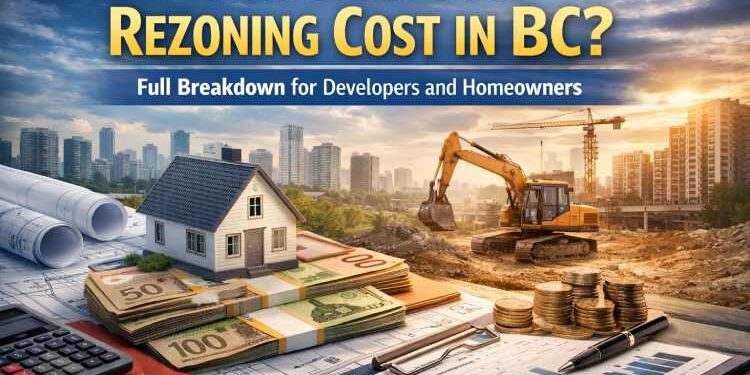
Rezoning property in British Columbia can unlock significant value for landowners, developers, and investors. A successful rezoning application may allow higher density housing, mixed use development, or entirely new land uses that were previously not permitted. However, many people begin the process without a clear understanding of the real cost of rezoning in BC.
The total cost of rezoning is not limited to the municipal application fee. Most projects require planning consultants, engineering reports, environmental studies, public engagement work, and preparation for public hearings. Depending on the municipality and the complexity of the proposal, rezoning costs in BC can range from a few thousand dollars for simple residential changes to well over $100,000 for complex development projects.
Understanding the full cost structure before beginning a rezoning application can help property owners manage risk and plan their project timeline more effectively.
Table of Contents
- Understanding the Rezoning Process in British Columbia
- Municipal Rezoning Application Fees
- Planning Consultants and Land Use Experts
- Engineering and Technical Studies
- Community Engagement and Public Consultation
- Public Hearing Preparation and Political Risk
- Total Rezoning Cost Examples in BC
- How Developers Reduce Rezoning Risk and Unexpected Costs
Understanding the Rezoning Process in British Columbia
Before discussing costs, it helps to understand what a rezoning application in BC involves. Rezoning is the process of changing the permitted land use or density of a property under a municipality’s zoning bylaw. This is typically required when a proposed development does not match the existing zoning designation.
For example, a property currently zoned for single family housing may require rezoning to allow townhouses, apartment buildings, commercial space, or mixed use development.
The rezoning process generally includes several stages. A developer or homeowner submits an application to the municipality along with concept drawings, engagement reports, and supporting documentation. Planning staff review the application and may request additional reports or revisions. Public consultation often occurs during this stage.
If the project proceeds, it may go to a public hearing where residents can express support or opposition. City council ultimately decides whether the rezoning application is approved or rejected.
Each stage in the lifecycle introduces potential costs that property owners should plan for in advance.
Municipal Rezoning Application Fees
The most visible cost associated with rezoning is the municipal rezoning application fee. Every municipality in British Columbia sets its own fee schedule.
For smaller communities, rezoning application fees may start around $2,000 to $5,000. Larger cities typically charge significantly more.
Major municipalities often charge between $10,000 and $30,000 or more depending on the size of the project. Some cities calculate fees based on the number of residential units or the total floor area being proposed.
Additional municipal costs may include:
- Development application processing fees
- Public notification costs
- Document review fees
- Re application fees if the proposal changes significantly
These fees are paid directly to the municipality and are typically required when submitting the rezoning application.
Although these fees are important, they often represent only a small portion of the total rezoning cost.
Planning Consultants and Land Use Experts
Most successful rezoning applications rely on experienced planning consultants or land use professionals who understand local policies and development approval processes.
Planning consultants help prepare the application package, coordinate technical studies, and communicate with municipal staff during the review process. Their work often includes preparing planning rationale reports that explain how the project aligns with the municipality’s Official Community Plan.
For smaller projects, a planning consultant may charge $5,000 to $15,000 depending on the complexity of the application.
For larger development projects, the planning consultant’s involvement may extend through multiple revisions, council meetings, and negotiations with city staff. In these cases, costs can reach $20,000 to $50,000 or more.
Experienced developers often consider this expense essential because a strong planning strategy can significantly improve the chances of approval.
Engineering and Technical Studies
Many rezoning applications require technical studies prepared by engineers and environmental professionals. Municipalities request these reports to ensure that proposed developments meet infrastructure, environmental, and safety requirements.
The type of studies required depends on the location and scale of the project. Common examples include traffic impact studies, stormwater management reports, environmental assessments, and geotechnical investigations.
Traffic studies alone can cost $10,000 to $40,000 depending on the scope. Geotechnical reports typically range from $5,000 to $20,000, while environmental assessments may cost even more if sensitive habitats are involved.
Municipalities may also require servicing reports showing how water, sewer, and stormwater infrastructure will support the proposed development.
These studies are often one of the largest cost categories associated with rezoning land in BC.
Community Engagement and Public Consultation
Community engagement has become an increasingly important part of the rezoning approval process in British Columbia. Municipalities often expect developers to demonstrate that local residents have been informed about the project and have had an opportunity to provide feedback.
Engagement efforts may include public meetings, open houses, surveys, and project websites explaining the proposal. Developers sometimes hire public engagement consultants or communications specialists to manage this process.
Depending on the scale of the project, engagement costs may range from $3,000 to $20,000 or more.
Effective community engagement can reduce opposition and help identify concerns early in the process. When done properly, it can significantly improve the chances of council approval.
Public Hearing Preparation and Political Risk
One of the most unpredictable aspects of rezoning is the public hearing stage. During this phase, residents may support or oppose the project before city council makes a final decision.
Preparing for a public hearing often requires careful planning. Developers must present clear information about the project, address community concerns, and demonstrate alignment with municipal planning objectives.
Some developers hire communications consultants or legal advisors to help prepare for this stage. Costs vary widely but may range from $5,000 to $25,000 depending on the level of preparation required.
Projects that face strong community opposition often require additional outreach and revisions, which can increase both costs and timelines.
Managing political risk is one of the most challenging parts of the rezoning process in BC.
Total Rezoning Cost Examples in BC
When all components are combined, the total cost of rezoning varies significantly depending on the project.
A small homeowner rezoning project such as subdividing a property or increasing density might cost between $10,000 and $30,000 in total.
A mid sized development project involving multiple units may require $40,000 to $100,000 or more once planning consultants, engineering studies, and engagement work are included.
Large developments in major cities can easily exceed $150,000 to $300,000 in rezoning related expenses before construction even begins.
Because of this cost structure, many developers treat rezoning as a high risk but potentially high reward stage of the development process.
How Developers Reduce Rezoning Risk and Unexpected Costs
Experienced developers take several steps to reduce the financial risk associated with rezoning.
Early due diligence is one of the most effective strategies. Reviewing the municipality’s Official Community Plan and speaking with planning staff before submitting an application can reveal whether a project is likely to receive support.
Many developers also conduct pre application community engagement to identify potential opposition before the public hearing stage.
Using structured project management tools can also help coordinate consultants, track studies, and maintain clear documentation during the approval process. When rezoning projects involve multiple stakeholders, structured engagement reporting can help demonstrate transparency and responsiveness to community concerns.
These strategies do not eliminate the cost of rezoning, but they can significantly reduce the likelihood of delays or rejection.
Conclusion
Rezoning can be one of the most valuable steps in a real estate development project. While the costs may appear significant, a successful rezoning approval can dramatically increase the value and potential use of a property.
For homeowners and developers considering rezoning land in British Columbia, understanding the full cost structure is essential. Careful planning, experienced consultants, and effective community engagement can make the difference between a rejected proposal and a successful development opportunity.