
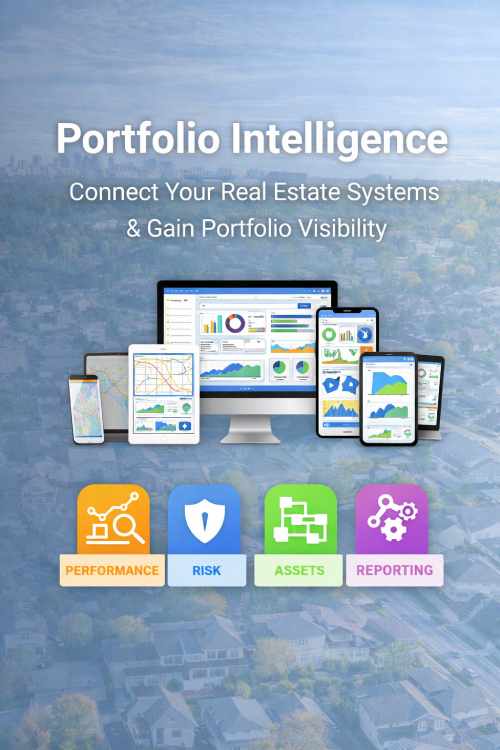
If you manage real estate assets, development projects, or property operations, decisions are only as good as the information behind them.
Portfolio Intelligence helps owners, developers, and operators see what is happening across assets, projects, and systems so they can make better decisions with more confidence.
This page explains how Portfolio Intelligence connects reporting, integrations, and operational visibility into one clearer view of portfolio performance.
Table of Contents
- What Portfolio Intelligence means
- Who this page is for
- The problem with fragmented portfolio data
- What Portfolio Intelligence includes
- Reporting systems and integrations
- What clients gain from Portfolio Intelligence
- How this fits the asset lifecycle
- When Portfolio Intelligence is the right fit
- Typical engagement scope
- Start the conversation
- Related Articles
What Portfolio Intelligence means
Portfolio Intelligence is the ability to see across your portfolio with enough clarity to make informed operational, financial, and strategic decisions.
That means more than looking at one property management dashboard or one spreadsheet at a time. It means connecting the information that matters across assets, development pipelines, property operations, approvals, risks, and performance metrics.
For some organizations, this starts with reporting and dashboard design. For others, it starts with data architecture, platform integration, or organizing operational workflows. In either case, the goal is the same: create a clearer picture of what is happening so leadership can act faster and with fewer blind spots.
Who this page is for
This service is designed for developers, property operators, asset managers, real estate leadership teams, and organizations that need better visibility across multiple moving parts.
It is especially relevant when you are dealing with a growing portfolio, multiple assets, multiple software platforms, fragmented reporting processes, or inconsistent information between teams.
This page is a fit for organizations that want stronger visibility into portfolio performance, development progress, property operations, risk, and reporting workflows.
The problem with fragmented portfolio data
Many real estate organizations have information spread across property management systems, spreadsheets, consultant reports, team updates, accounting processes, and ad hoc reporting files. Teams may be working hard, but leadership still struggles to answer simple questions quickly.
What is happening across the portfolio right now. Which assets need attention. Where are the risks. Which projects are moving forward. Which teams are behind. What is driving performance. What information can be trusted.
Without a structured approach to Portfolio Intelligence, reporting becomes reactive. Teams spend time assembling information instead of using it. Leadership makes decisions with partial visibility. Important trends, delays, and risks are harder to spot early.
This is where Portfolio Intelligence becomes valuable. It helps turn scattered information into a more useful operating view.
What Portfolio Intelligence includes
The exact scope depends on the client, but Portfolio Intelligence typically combines strategic reporting design, system integration thinking, and practical workflow visibility.
This may include defining what decision makers actually need to see, organizing data sources, clarifying reporting workflows, identifying operational bottlenecks, and designing portfolio level views that help leadership understand performance across assets and projects.
In some cases the work includes designing or improving dashboards. In other cases it includes assessing a reporting stack that is already in place but not delivering reliable information. It may also involve connecting project tracking, property management data, and portfolio level KPIs into a more coherent reporting structure.
The purpose is not to create more reports for the sake of reporting. The purpose is to help the right people see the right information at the right time.
Reporting systems and integrations
Many organizations already have software in place, but the systems do not work together cleanly enough to support good decision making. Portfolio Intelligence can include support around reporting systems, data flows, and platform integrations so information becomes more reliable and easier to use.
This can involve reviewing how data moves between tools, identifying gaps in current dashboards, clarifying which systems should act as sources of truth, and improving how portfolio reporting is structured. It can also include planning for integrations between property management platforms, operational tools, and broader reporting environments.
For some clients, the need is relatively simple. They want cleaner portfolio reporting and less manual effort. For others, the need is more advanced. They want stronger architecture that supports executive dashboards, asset level visibility, development pipeline reporting, and reliable long term decision support.
What clients gain from Portfolio Intelligence
A strong Portfolio Intelligence approach helps leadership move from scattered updates to useful visibility.
Clients typically gain a clearer view of asset performance, stronger reporting consistency, better visibility into development and operational pipelines, improved understanding of risks, and more confidence in the numbers being reviewed. It also reduces the friction that comes from teams relying on disconnected spreadsheets and manual updates.
When done properly, Portfolio Intelligence helps decision makers spend less time chasing information and more time acting on it.
For some organizations, the immediate benefit is operational clarity. For others, it is investor reporting, internal accountability, risk awareness, or the ability to scale more effectively across a growing portfolio.
How this fits the asset lifecycle
Portfolio Intelligence is not limited to one stage of the real estate lifecycle. It can support visibility across early feasibility, approvals, development execution, property operations, and longer term asset performance.
That is why it fits naturally within a broader asset lifecycle approach. A project may begin with feasibility and approvals, move through design and delivery, and then continue into leasing, operations, and portfolio management. The value of Portfolio Intelligence is that it can help connect these phases instead of treating them as isolated events.
This creates stronger continuity between project activity and portfolio level decision making.
When Portfolio Intelligence is the right fit
This service is often the right fit when leadership feels they are working with incomplete visibility or when reporting processes have become too manual, too fragmented, or too difficult to trust.
It may be the right fit if your organization is asking questions such as: Why are our dashboards inconsistent. Why does it take so long to prepare updates. Why are project, operational, and portfolio views disconnected. How do we unify information across systems. How do we create reporting that leadership can actually use.
It is also a strong fit when a real estate organization has outgrown basic platform reporting and needs a more deliberate structure for understanding performance across assets, teams, and workflows.
Typical engagement scope
Every organization is different, so scope should be shaped around the actual reporting and visibility problem being solved.
Some engagements may focus on reviewing current systems and defining a reporting framework. Others may involve clarifying KPI structures, assessing data architecture, identifying integration priorities, or designing a practical roadmap for improving portfolio visibility.
For organizations with more advanced needs, the work may extend into platform and reporting system strategy, lifecycle tracking, risk visibility, and the structure required for reliable executive reporting.
The best starting point is usually a scoped discussion focused on current systems, reporting pain points, and the decisions leadership needs to support.
Start the conversation
If your team is struggling with fragmented reporting, inconsistent dashboards, disconnected systems, or weak visibility across assets and projects, Portfolio Intelligence may be the right next step.
This service is designed to help real estate organizations move toward clearer reporting, better decision support, and stronger operational visibility.
Related Articles
[How Real Estate Developers Build Portfolio Reporting Systems from Property Management Software]
A closer look at how reporting systems are structured across growing real estate organizations.
[Why Power BI Dashboards Fail in Property Management (And How to Fix the Data Architecture)]
An article explaining why dashboards often fail when the underlying data structure is weak.
[From Buildium to Portfolio Intelligence: Designing Azure Data Pipelines and Power BI Dashboards]
A practical article for organizations thinking about integrations, pipelines, and reporting architecture.
[Project Reporting & Stakeholder Engagement]
A related service page focused on visibility, communication, and reporting during project execution.Portfolio Intelligence helps real estate owners, developers, and operators improve reporting, connect systems, and gain clearer visibility across assets, projects, risks, and performance.